


How School Board Elections Quietly Changed America
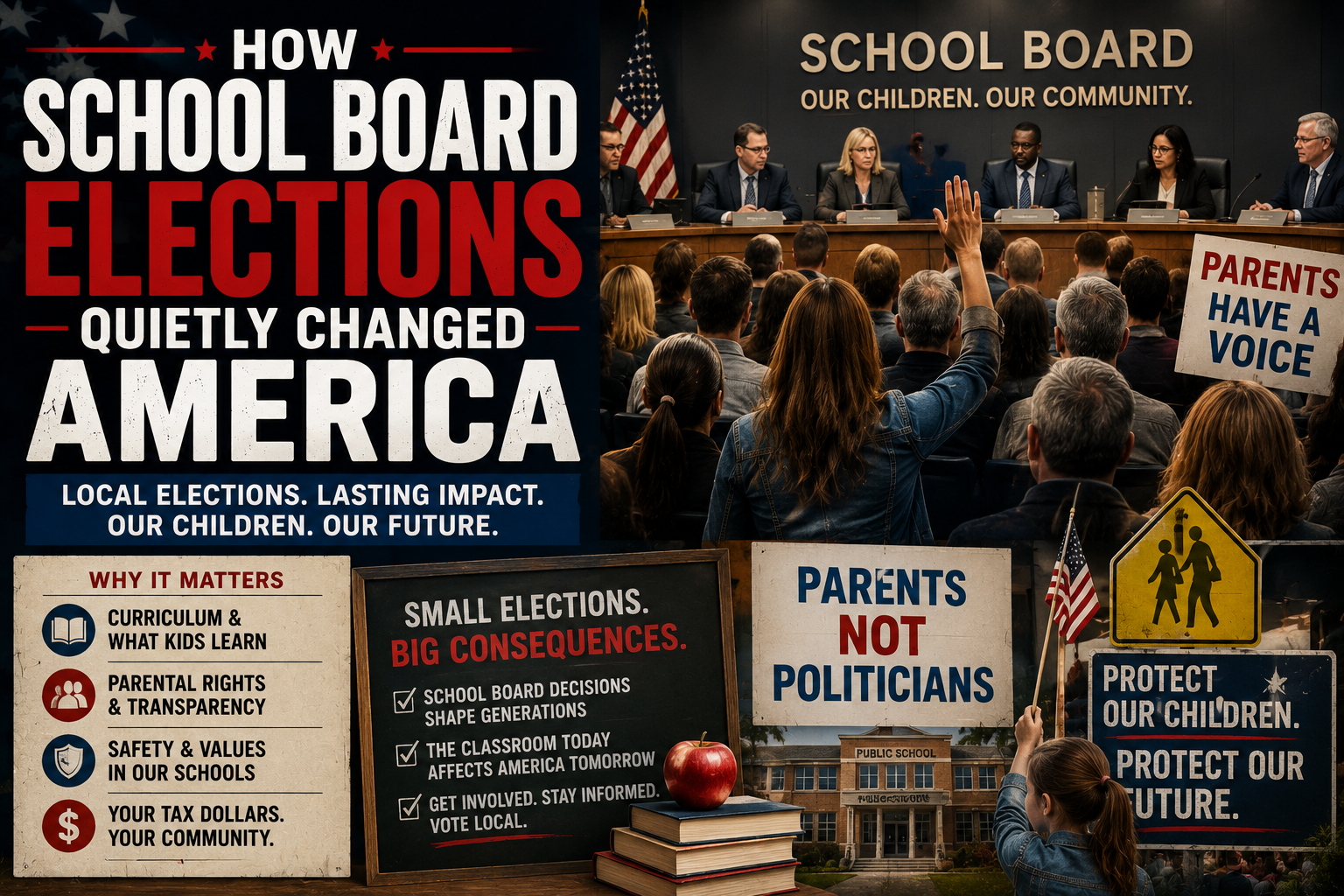
For years, school board elections attracted little national attention. Voter turnout was often low, campaigns received limited media coverage, and many Americans viewed local education politics as relatively routine civic matters.
That has changed dramatically.
In recent years, school boards became one of the most fiercely contested battlegrounds in American culture and politics. Parents, activists, teachers, and political organizations increasingly recognize that local education decisions can shape communities — and even national conversations — far beyond classroom walls.
Many Americans began paying closer attention to school boards during debates surrounding remote learning, curriculum transparency, parental rights, and educational content. Frustrations that built during the COVID-19 pandemic intensified public involvement in local education governance.
Parents who previously paid little attention to school board meetings suddenly became highly engaged.
Concerns surrounding curriculum became especially controversial. Debates emerged involving:
- history education,
- race discussions,
- gender ideology,
- sexually explicit materials,
- and the role of political activism inside classrooms.
Many parents argued schools were moving beyond academics into ideological territory that should remain under family guidance rather than institutional influence.
Others defended these educational approaches as necessary discussions involving inclusion, social awareness, and modern cultural realities.
These disagreements transformed school boards into major political flashpoints.
Grassroots activism exploded nationwide. Parents organized local groups, attended meetings in large numbers, launched campaigns, and challenged incumbents. Social media amplified local controversies into national news stories almost overnight.
School board races that once attracted little attention suddenly became highly competitive.
This shift reflects something larger happening across American society.
Many citizens increasingly believe local institutions play a major role in shaping cultural values, civic identity, and future generations. As trust in national institutions declines, Americans are focusing more attention on local governance where they feel individual involvement can still make a direct impact.
Education sits at the center of that concern.
Schools influence:
- history,
- citizenship,
- morality,
- social development,
- and cultural understanding.
Because of this, debates surrounding curriculum often become emotional and deeply personal.
Parental rights became one of the defining themes of recent school board activism. Many families argued they should have greater transparency regarding educational materials, classroom discussions, and district policies affecting children.
Critics of some school systems also raised concerns about declining academic performance, discipline problems, and bureaucratic expansion. Questions about educational priorities increasingly moved beyond test scores into broader cultural debates about the purpose of public education itself.
Technology also changed the dynamic.
Parents gained greater visibility into classroom content through:
- virtual learning,
- online assignments,
- social media discussions,
- and public document sharing.
Information that once remained largely inside classrooms now spreads rapidly online, fueling activism and public debate.
Political organizations recognized this shift quickly.
Groups across the ideological spectrum began investing heavily in local school board races because they understood these elections can influence broader cultural narratives. What happens in local districts increasingly shapes state and national politics.
The renewed focus on school boards also reflects growing interest in grassroots civic engagement. Many Americans feel disconnected from federal politics but believe local involvement still matters. School board meetings, city councils, and county commissions have become important arenas for citizen activism.
This trend may continue expanding.
Americans are increasingly realizing that local elections often have direct influence over daily life:
- education,
- taxes,
- public safety,
- infrastructure,
- and community culture.
School board elections became symbolic of a broader national debate over who shapes the values and future direction of American society.
For some, these elections represent a fight for parental influence and local accountability.
For others, they represent broader cultural and political struggles unfolding across the country.
Either way, one thing is clear:
school board elections are no longer quiet local affairs.
They have become one of the most important civic battlegrounds in modern America.
 French
 English
 Arabic
 Spanish
 Portuguese
 Deutsch
 Turkish
 Dutch
Dutch
 Italiano
 Russian
 Romaian
 Portuguese (Brazil)
 Greek
Greek