


Why Millions of Americans No Longer Trust Mainstream Media
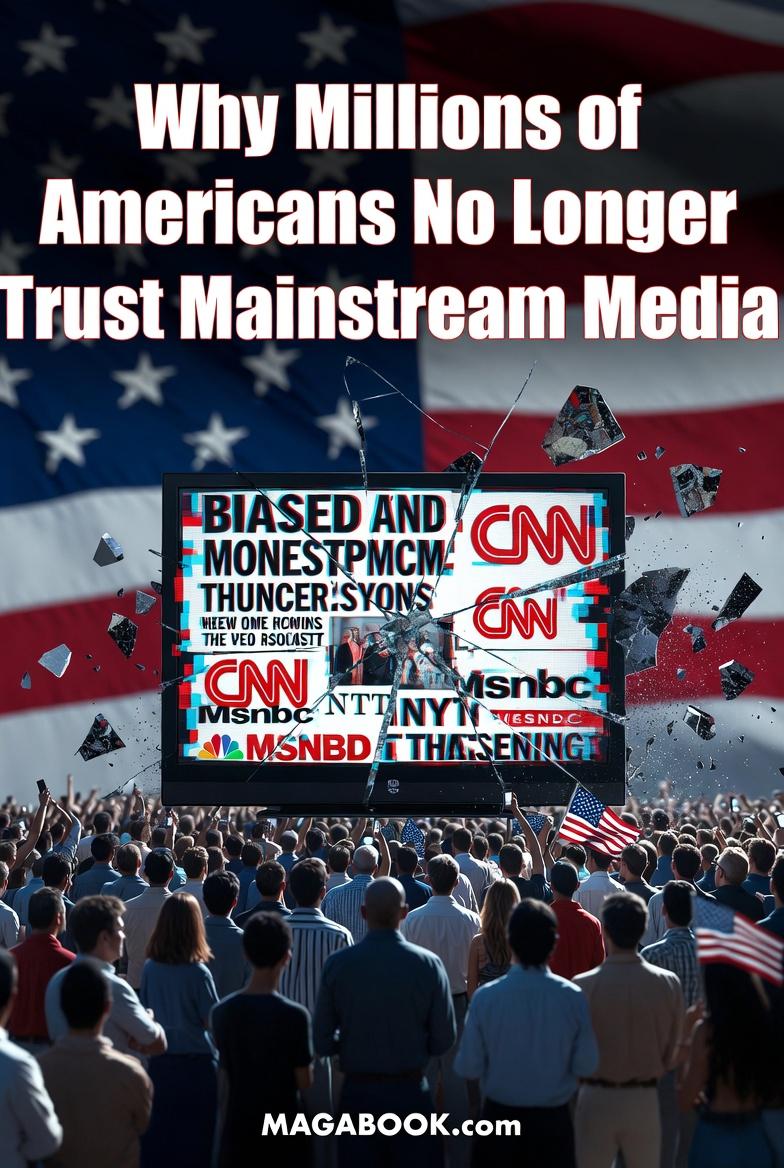
For generations, Americans viewed major news organizations as trusted gatekeepers of information. Evening broadcasts from legacy television networks and front-page newspaper headlines helped shape public understanding of politics, culture, economics, and world events. Journalists were often regarded as neutral observers whose responsibility was to inform the public honestly and accurately.
That trust has eroded dramatically.
Recent polls consistently show that confidence in mainstream media is near historic lows. Millions of Americans across political, racial, and economic lines increasingly believe that corporate news organizations are selective in what they cover, biased in how they report, and motivated more by ideology, ratings, or political influence than truth itself.
The reasons for this growing distrust are complex, but several major trends have pushed Americans toward skepticism.
One major factor is the perception of political bias. Many Americans believe large media corporations no longer attempt to hide their ideological leanings. Coverage often appears slanted depending on the political issue, public figure, or cultural debate being discussed. Conservatives in particular frequently argue that mainstream outlets treat right-leaning movements with hostility while giving favorable treatment to progressive causes.
This perception intensified during highly polarized political eras. Coverage surrounding elections, immigration, COVID-19 policies, cultural debates, and protests often appeared sharply divided depending on the outlet. Americans noticed that different networks could report the exact same event while presenting entirely different narratives, facts, and emotional framing.
Social media accelerated this collapse of trust.
For the first time in history, average citizens gained the ability to compare official news coverage against raw video footage, independent livestreams, podcasts, eyewitness accounts, and alternative reporting in real time. Events once filtered exclusively through corporate media organizations could now be viewed directly by millions of people online.
This changed everything.
Citizen journalists, independent commentators, podcasters, and livestream creators began building enormous audiences by offering perspectives outside traditional media institutions. Some viewers found these independent voices more authentic because they appeared less scripted and less controlled by corporate interests.
The rise of long-form podcasts also played a major role. Traditional television news relies heavily on short segments, emotional headlines, and rapid commentary. Podcasts allowed audiences to hear unfiltered conversations lasting hours instead of minutes. Many Americans felt they could better evaluate public figures and controversial topics through direct discussion rather than edited television clips.
Trust was further damaged by repeated public controversies involving inaccurate reporting. Highly publicized corrections, retractions, and disputed narratives created the impression that some organizations prioritized speed or political advantage over careful verification. Even when mistakes were corrected later, many viewers felt the damage had already been done.
Another major issue involves sensationalism.
Modern media competes in a 24-hour attention economy. Fear, outrage, division, and controversy generate clicks, ratings, and advertising revenue. Critics argue this business model encourages emotionally manipulative reporting that amplifies conflict while downplaying nuance and complexity.
Americans increasingly feel exhausted by constant outrage cycles.
Many viewers believe mainstream news focuses heavily on division because division keeps audiences emotionally engaged. Stories are often framed around crisis, scandal, conflict, or fear because emotional reactions increase viewership and online sharing.
Technology companies also became part of the debate.
Large social media platforms have faced criticism for content moderation decisions, political censorship allegations, and inconsistent enforcement of platform rules. Many Americans began questioning whether information online was being shaped not only by journalists but also by powerful technology corporations influencing what users can see or share.
This fueled broader concerns about free speech and information control in the digital age.
At the same time, legacy media organizations have struggled financially. Newspaper subscriptions declined, advertising revenue shifted online, and competition exploded. Many companies responded by leaning harder into opinion-based content designed to energize loyal audiences rather than appeal broadly across political lines.
The result has been the fragmentation of American media.
Instead of one shared national conversation, Americans now consume information through entirely different ecosystems. One person may rely on cable news. Another may trust independent podcasts. Another may follow livestream creators or social media commentators. Increasingly, citizens do not merely disagree on opinions — they disagree on basic facts.
This creates enormous challenges for national unity and civic trust.
Still, the growing skepticism toward mainstream media does not necessarily mean Americans have stopped caring about truth. In many ways, the opposite may be true. Millions are actively searching for more transparent, accountable, and independent sources of information.
The demand for alternative platforms continues growing because people want open discussion, competing viewpoints, and direct access to information without heavy institutional filtering. This is one reason independent media ecosystems, podcasts, livestream platforms, and citizen journalism networks continue expanding rapidly.
The future of media may ultimately depend on credibility.
Audiences today are more skeptical, more informed, and more capable of cross-checking information than previous generations. Blind trust in large institutions is fading across society, including government, academia, corporate culture, and journalism itself.
Americans increasingly want transparency instead of authority.
They want evidence instead of slogans.
They want honest debate instead of scripted narratives.
And they want platforms where open conversation is still possible.
Whether mainstream media can regain public trust remains uncertain. But one thing is clear: the information landscape has permanently changed. The monopoly once held by corporate news organizations is gone, replaced by a decentralized digital environment where independent voices can compete directly for public attention.
That transformation is reshaping politics, culture, and public discourse across the country — and its effects are only beginning to unfold.
 Spanish
 English
 Arabic
 French
 Portuguese
 Deutsch
 Turkish
 Dutch
Dutch
 Italiano
 Russian
 Romaian
 Portuguese (Brazil)
 Greek
Greek