


The Rise of the America First Movement
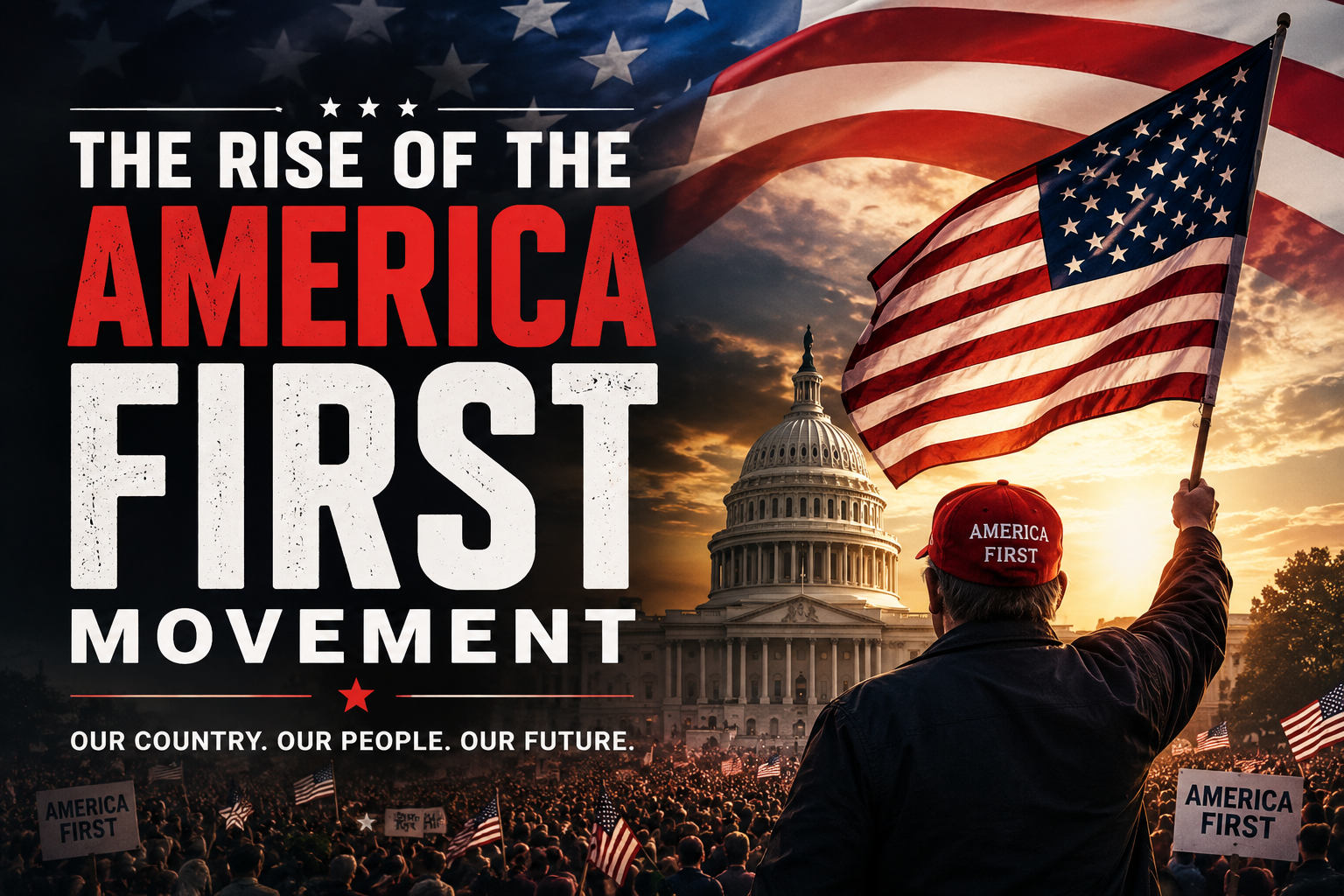
The phrase “America First” has become one of the defining political and cultural slogans of modern American politics. To supporters, it represents national sovereignty, economic nationalism, border security, constitutional rights, and the belief that American leaders should prioritize the interests of American citizens above global institutions or foreign agendas. To critics, it represents a dramatic shift away from traditional political norms and international priorities.
Regardless of perspective, the movement’s influence on American politics is undeniable.
The roots of America First thinking stretch far deeper than modern elections. Throughout American history, leaders and voters have debated the balance between international involvement and domestic priorities. Questions surrounding trade, immigration, military intervention, manufacturing, and national identity have shaped political movements for generations.
In recent decades, however, many Americans began feeling disconnected from political elites, corporate institutions, and global economic systems. Manufacturing jobs disappeared from many communities. Small towns struggled economically. Wages stagnated while housing, healthcare, and education costs rose sharply. Millions of citizens believed political leaders from both parties were more focused on international priorities than problems affecting ordinary Americans.
This growing frustration created fertile ground for populist movements.
The America First movement gained momentum by speaking directly to voters who felt ignored by traditional institutions. Supporters argued that political leaders had prioritized globalization, foreign intervention, multinational corporations, and international agreements while neglecting the economic and cultural stability of American communities.
Trade became one of the central issues.
For decades, globalization reshaped the American economy. Manufacturing jobs moved overseas as corporations pursued cheaper labor and production costs. While some sectors benefited from global trade, many industrial regions experienced severe economic decline. Factories closed. Communities weakened. Entire regions saw rising unemployment, addiction, and poverty.
America First supporters argued that trade policies favored corporate profits over American workers.
Immigration also became a defining issue. Advocates of stronger border security argued that uncontrolled immigration placed pressure on public services, wages, housing, and national cohesion. Supporters viewed border enforcement as essential to preserving sovereignty and protecting American citizens.
Cultural identity became another major factor.
Many Americans felt rapid cultural changes were occurring without meaningful public debate. Questions involving patriotism, religion, education, family structure, free speech, and national history became increasingly polarizing. Supporters of the America First movement often described themselves as defending traditional American values against political and cultural institutions they believed were hostile toward those values.
The movement also benefited from distrust in mainstream media and political establishments.
Millions of voters believed legacy institutions no longer represented ordinary citizens. Independent media, podcasts, livestreams, and alternative news platforms helped amplify America First messaging outside traditional gatekeepers. Social media allowed political movements to organize and communicate directly with supporters at unprecedented speed.
This digital infrastructure transformed modern politics.
Instead of relying entirely on television networks or newspapers, movements could build communities online through videos, memes, livestreams, podcasts, and direct engagement. Political communication became faster, more emotional, and more decentralized.
The America First movement also placed strong emphasis on nationalism and sovereignty. Supporters argued that nations have the right and responsibility to protect borders, defend economic interests, preserve cultural identity, and prioritize citizens. Many viewed global institutions and multinational agreements with skepticism, believing unelected organizations should not hold excessive influence over domestic policy.
Critics, however, raised concerns that aggressive nationalism could deepen division, isolate America internationally, or inflame political tensions. Debates over immigration, trade, foreign policy, and national identity became increasingly intense across media and political institutions.
Despite controversy, the movement continued growing because it tapped into deeper frustrations extending far beyond individual politicians. Many Americans felt disconnected from cultural elites, economically insecure, politically unheard, and uncertain about the country’s future direction.
The movement’s appeal expanded beyond traditional political categories.
Supporters included:
- working-class voters,
- small business owners,
- veterans,
- rural communities,
- religious conservatives,
- younger populists,
- independent voters,
- and citizens frustrated with establishment politics.
The movement also embraced strong themes of patriotism and national pride. Flags, national symbols, military appreciation, constitutional rights, and support for law enforcement became visible cultural markers associated with the movement.
Digital activism became especially important.
Online communities allowed supporters to organize rallies, share news, debate issues, and mobilize politically outside traditional party structures. Independent creators, livestream hosts, podcasters, and citizen journalists became major influencers within the movement ecosystem.
This represented a major shift in political communication.
Power was no longer held exclusively by television networks or party organizations. Independent digital voices could now shape public opinion at massive scale.
The future of the America First movement remains uncertain because it is larger than any single election cycle. It reflects broader debates about globalization, national identity, economic inequality, cultural change, free speech, border security, and institutional trust.
Those debates are unlikely to disappear soon.
As technology continues reshaping communication and political organizing, movements rooted in identity, sovereignty, and populism will likely remain influential. Millions of Americans continue searching for leaders and platforms that they believe prioritize their communities, values, and economic interests.
The rise of the America First movement ultimately reflects something deeper happening across the country: a growing demand from citizens who want a greater voice in shaping America’s future direction.
And that conversation is far from over.
 Portuguese (Brazil)
 English
 Arabic
 French
 Spanish
 Portuguese
 Deutsch
 Turkish
 Dutch
Dutch
 Italiano
 Russian
 Romaian
 Greek
Greek