


The Border Crisis and Its Impact on American Communities
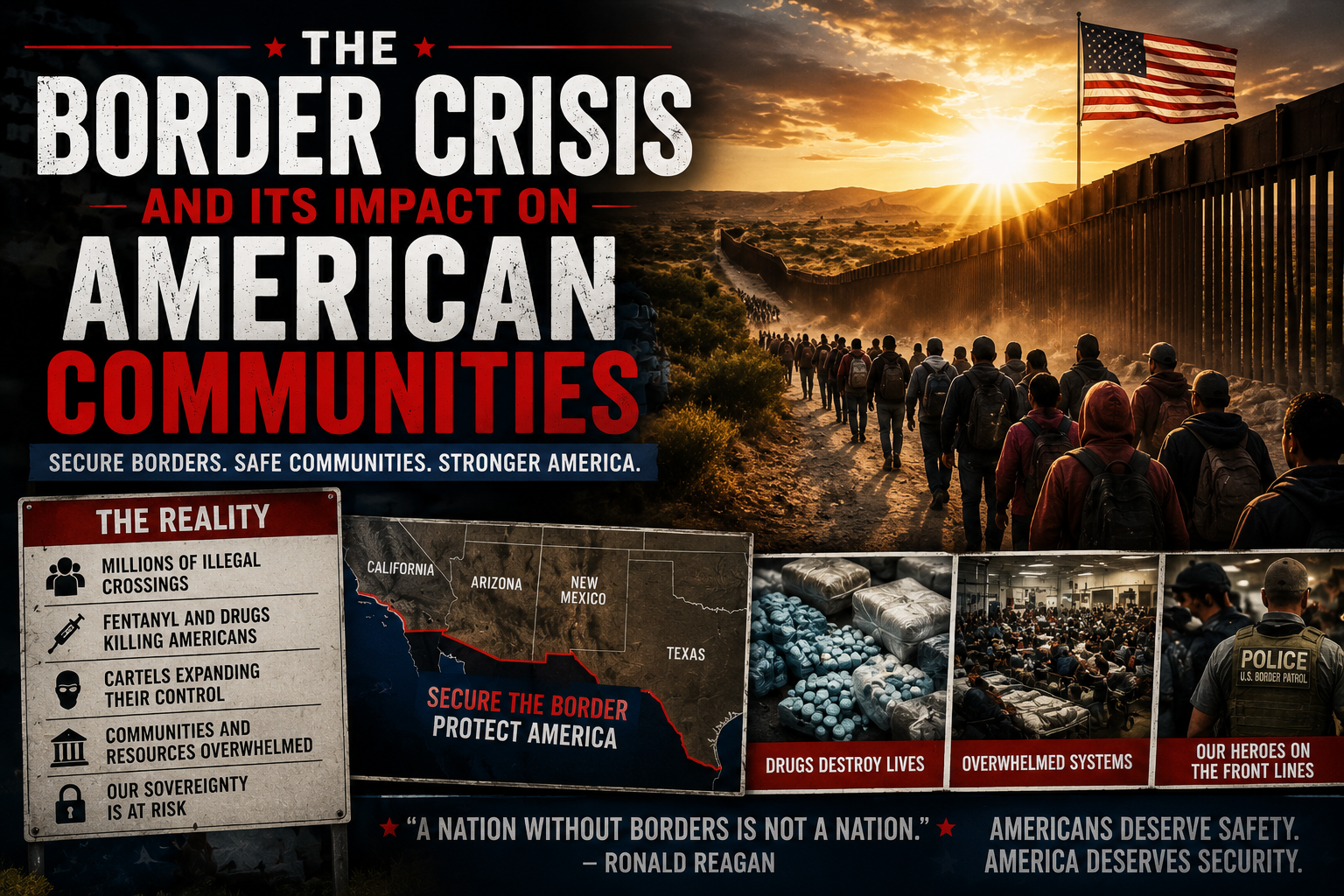
Immigration has long been one of the most debated issues in American politics. The United States has historically been a destination for people seeking opportunity, safety, and economic advancement. But in recent years, concerns surrounding border security, illegal immigration, human trafficking, cartel activity, and overwhelmed public systems have intensified across the country.
For many Americans, the debate is no longer abstract.
Communities across border states and major cities increasingly report strain on housing, healthcare systems, schools, law enforcement, and social services. Political leaders remain sharply divided over how to address the situation, while voters continue demanding solutions.
Supporters of stronger border enforcement argue that national sovereignty depends on secure borders. They believe every nation has the right and responsibility to regulate who enters the country, enforce immigration laws, and protect citizens from criminal activity associated with illegal border crossings.
Critics of current border policies often point to the growing influence of drug cartels and trafficking networks operating along the southern border. Fentanyl trafficking, in particular, has become a major concern as overdose deaths continue devastating American families and communities.
Local officials in several states have also raised concerns about overwhelmed public infrastructure. Cities experiencing large migrant surges have reported challenges involving:
- emergency shelters,
- public schools,
- healthcare capacity,
- and municipal budgets.
Even some traditionally immigration-friendly cities have acknowledged difficulties managing rapid population increases.
At the same time, immigration advocates argue the issue is more complicated than political slogans alone. Many migrants are fleeing violence, poverty, corruption, or instability in their home countries. Humanitarian groups emphasize the need for compassion, lawful asylum processes, and reforms to outdated immigration systems.
This tension sits at the center of the national debate.
Americans broadly agree that the immigration system is deeply flawed, but consensus on solutions remains difficult. Some favor stricter enforcement and deportation policies. Others support expanded legal pathways, asylum reform, or comprehensive immigration legislation.
The issue has also become heavily politicized.
Border security is now closely tied to broader cultural and political concerns involving:
- national identity,
- economic pressure,
- public safety,
- labor markets,
- and trust in government institutions.
For many voters, the border debate symbolizes larger frustrations about whether political leaders are effectively managing national priorities.
Media coverage has intensified these divisions. Different outlets often frame the issue in dramatically different ways. Some focus primarily on humanitarian concerns. Others emphasize crime, trafficking, or security failures. Americans consuming different media ecosystems frequently develop very different perceptions of the crisis itself.
Social media has amplified this further.
Videos, livestreams, citizen journalism, and viral footage from border regions spread rapidly online, often influencing public opinion more powerfully than traditional news reports. Independent creators and local officials increasingly shape national conversation surrounding immigration policy.
Economic concerns also remain central.
Critics of uncontrolled immigration argue that rapid population increases can place downward pressure on wages in some industries while increasing competition for housing and public resources. Others argue immigrants contribute significantly to economic growth, entrepreneurship, and labor force expansion.
These debates are likely to continue for years.
The border crisis reflects deeper questions about:
- sovereignty,
- security,
- humanitarian responsibility,
- economic priorities,
- and the future identity of the country itself.
Many Americans believe Washington has failed to create long-term immigration solutions despite decades of political promises from both parties.
As election cycles intensify, border policy will likely remain one of the most influential and emotionally charged issues in American politics.
What happens next may shape:
- national security,
- economic stability,
- political polarization,
- and public trust in government for generations to come.
 Portuguese
 English
 Arabic
 French
 Spanish
 Deutsch
 Turkish
 Dutch
Dutch
 Italiano
 Russian
 Romaian
 Portuguese (Brazil)
 Greek
Greek